Cross Country Ski Length Guide: Finding Your Perfect Fit (Updated 05/05/2026)
Finding the ideal cross-country ski length is crucial for performance and enjoyment; consider height, weight, style, and skill level for a perfect fit.
Welcome to the world of cross-country skiing! Properly sized skis are fundamental to a rewarding experience, impacting control, efficiency, and overall enjoyment on the snow. This guide will navigate you through the complexities of ski sizing, ensuring you find the perfect length for your individual needs. Determining the correct length isn’t a one-size-fits-all approach; it’s a nuanced process considering several key factors.
We’ll explore how your height, weight, and chosen skiing style – whether classic, skate, or backcountry – all play a vital role. Understanding these elements will empower you to make an informed decision, whether you’re a beginner or a seasoned pro. Don’t underestimate the power of a well-fitted ski; it can truly transform your time on the trails!
Why Ski Length Matters
Ski length directly influences several critical aspects of your skiing experience. Too short, and you’ll lack stability and glide, making it difficult to maintain speed and control, especially on descents. Conversely, overly long skis can feel cumbersome and challenging to maneuver, hindering your ability to execute efficient strides and turns. The correct length optimizes wax coverage, enhancing grip in classic skiing and providing a stable platform for powerful pushes in skate skiing.
Properly sized skis also contribute to better balance and reduce fatigue, allowing you to ski for longer periods with greater comfort. Finding the sweet spot ensures efficient energy transfer, maximizing your performance and enjoyment on the trails. Ultimately, the right length unlocks your full potential as a cross-country skier.
Factors Influencing Ski Length
Several key factors determine the optimal cross-country ski length beyond just your height. Your weight significantly impacts ski performance; heavier skiers generally require longer skis for adequate support and floatation, while lighter skiers benefit from shorter, more maneuverable skis. Skiing style is paramount – classic, skate, and backcountry skiing each demand different lengths. Classic skis typically fall within a height +20-30cm range, skate skis are shorter (height +8-15cm), and backcountry skis vary based on terrain and skill.
Finally, your skill level plays a role; beginners often benefit from slightly shorter skis for easier control, while experienced skiers may prefer longer skis for increased speed and stability. Considering these interconnected elements ensures a personalized and effective ski selection.
Height and Ski Length Correlation
Generally, a skier’s height is the primary starting point for determining appropriate cross-country ski length. A common guideline suggests multiplying your height in inches by 2.6 to arrive at a rough estimate for classic touring skis. For skate skiing, a slightly shorter length, around your height in inches multiplied by 2.5, is often recommended. However, this is merely a baseline; individual variations in weight, skiing style, and skill level necessitate adjustments.
It’s crucial to remember that these calculations provide an approximation, and deviations are common. Taller skiers typically require longer skis for stability, while shorter skiers may find shorter skis easier to manage.
Weight Considerations for Ski Sizing
Weight significantly impacts optimal cross-country ski length, often requiring adjustments to the height-based recommendations. Heavier skiers generally need longer skis to provide sufficient support and prevent excessive sinking, especially in softer snow conditions. Conversely, lighter skiers may benefit from shorter skis for improved maneuverability and easier kick-and-glide action.
If you are significantly above or below average weight for your height, consider adjusting the ski length accordingly. A heavier individual might add 5-10cm to the calculated length, while a lighter skier might subtract a similar amount. Prioritizing appropriate flex is also vital; heavier skiers need stiffer skis.
Skiing Style: Classic vs. Skate vs. Backcountry
Your chosen cross-country skiing style dramatically influences the ideal ski length. Classic skiing, focusing on a diagonal stride, typically utilizes skis 20-30cm taller than your height. Skate skiing, employing a V-shaped push-off, requires shorter skis – around 8-15cm above your height – for better control and responsiveness.
Backcountry skiing, involving varied terrain and often deeper snow, demands the most nuanced sizing. Lengths generally fall within your height plus or minus 2-6cm, depending on skill level and intended use. More experienced backcountry skiers often prefer shorter skis for agility, while beginners might opt for longer skis for stability and floatation in powder.
Classic Ski Length Guide
For classic cross-country skiing, selecting the correct length is paramount for efficient gliding and kick wax performance. A general guideline suggests skis should be approximately 20-30 centimeters taller than your actual height. However, this is a starting point, and adjustments are often necessary.
Weight plays a significant role; heavier skiers within a height range should lean towards the longer end of the spectrum, while lighter skiers can opt for shorter skis. Shorter skis, closer to chin height, are beneficial for those prioritizing maneuverability or skiing in varied, less-groomed conditions. Precise sizing ensures optimal wax pocket placement and a comfortable, effective stride.
Classic Ski Sizing Based on Height
Generally, classic cross-country ski length is determined by your height, with a baseline of adding 20 to 30 centimeters. For instance, a skier who is 178 cm (approximately 70 inches) tall would typically start with skis around 198-208 cm long. This provides a good balance between glide and control.
A quick calculation suggests multiplying your height in inches by 2.6 to get an approximate classic touring ski size. However, remember this is a starting point. Taller individuals generally require longer skis for stability, while shorter skiers benefit from skis that are easier to maneuver. Always consider weight and skiing style alongside height for a truly personalized fit.
Adjustments for Weight in Classic Skiing
Weight significantly impacts optimal classic ski length; heavier skiers require longer skis to provide sufficient support and prevent excessive sinking in soft snow. Conversely, lighter skiers may benefit from slightly shorter skis for improved maneuverability and easier kick-and-glide action.
If you are significantly above or below average weight for your height, adjust the baseline length accordingly. For heavier skiers, add a few centimeters to the recommended length, while lighter skiers can subtract a similar amount. If you’re unsure, erring on the side of slightly shorter is often preferable, especially for beginners, as it enhances control. Remember, finding the right balance is key for efficient and enjoyable classic skiing.
Skate Ski Length Guide
Skate skiing demands a different length consideration than classic; generally, skate skis are taller, promoting stability at higher speeds and efficient gliding. A common starting point is to multiply your height in inches by 2.6 and then subtract 5 centimeters for an approximate skate ski size.
However, this is just a baseline. Factors like skill level and intended use play a crucial role. Beginners often benefit from slightly shorter skis for easier turning and control, while experienced skaters may prefer longer skis for increased glide and speed. Consider your skating technique and the terrain you’ll be tackling when making your final decision. Precise sizing ensures optimal performance and enjoyment on the skate course.
Skate Ski Sizing Based on Height
Height is a primary factor in determining skate ski length, providing a foundational starting point for sizing. As a general rule, multiply your height in inches by 2.6 to obtain a preliminary ski length in centimeters. For example, a skier who is 5’10” (70 inches) would initially consider a ski around 182 cm long (70 x 2.6 = 182).
However, remember this is an approximation. This calculation offers a good baseline, but individual variations in weight, technique, and preferred skiing style necessitate further adjustments. It’s crucial to view this height-based calculation as a starting point, not a definitive answer, and consider other influencing factors for a truly personalized fit.
Skate Ski Length and Skill Level
Skate ski length adjustments based on skill level are vital for optimal performance. Beginner skaters often benefit from slightly shorter skis, closer to chin height, enhancing maneuverability and control during the learning process. This shorter length makes it easier to initiate turns and maintain balance.
Intermediate and advanced skaters typically opt for longer skis, extending towards or even slightly beyond chin height. This increased length provides greater stability at higher speeds and improved glide, crucial for efficient skating technique. Experienced skiers can leverage the longer length for powerful strides and enhanced energy transfer. Ultimately, a skilled skater’s preference plays a significant role in fine-tuning ski length.
Backcountry Ski Length Guide
Backcountry ski length selection differs significantly from classic or skate skiing, prioritizing versatility and floatation in varied terrain. Generally, backcountry skis are sized relative to height, with a range of +/- 2 to 6 inches, heavily influenced by both skill level and intended use. Less experienced backcountry skiers should lean towards the shorter end of the range for increased maneuverability in tight spaces and easier turning.
More skilled skiers tackling challenging terrain or prioritizing speed and glide can opt for longer skis. Longer lengths provide better stability and floatation in deep snow, crucial for navigating ungroomed conditions. Consider the typical snow conditions and terrain you’ll encounter; powder-focused skiers will benefit from longer skis, while those on firmer snow may prefer a shorter length.
Backcountry Ski Sizing: Height and Skill
Determining backcountry ski length requires a careful balance between height and skiing ability. As a starting point, consider your height in inches and subtract 2 to 6 inches to find a suitable range. Beginners should generally opt for the shorter end of this range – subtracting closer to 6 inches – to enhance control and maneuverability in unpredictable backcountry conditions.
More experienced skiers, comfortable navigating diverse terrain, can choose lengths closer to their height or even extend slightly beyond, subtracting only 2 inches. This provides increased stability and floatation in deeper snow. Remember, skill level dramatically impacts the optimal length; a confident skier can handle a longer ski, while a novice benefits from increased agility.
Backcountry Ski Length and Terrain
Terrain plays a significant role in backcountry ski length selection. For primarily flat or gently rolling terrain, a shorter ski within the recommended range will offer easier turning and quicker response times. However, if you frequently encounter steep descents or variable snow conditions, a longer ski provides enhanced stability and control at higher speeds.
Powder snow demands longer skis to maximize floatation and prevent sinking. Conversely, firmer snow or icy conditions benefit from slightly shorter skis for improved edge hold. Consider the predominant type of terrain you’ll be skiing; a versatile backcountry skier might even own multiple pairs of skis tailored to different conditions. Always prioritize stability and control based on the expected landscape.
Cross Country Ski Size Charts (Men’s, Women’s, Kids)
Utilizing size charts is a fundamental step in finding the correct cross-country ski length. Men’s charts generally correlate height with ski length, often suggesting a range of sizes. Women’s charts typically recommend slightly shorter lengths for the same height, accounting for differences in body mass and strength. Children’s charts are further adjusted to accommodate their developing physiques.
These charts serve as a starting point, but individual adjustments based on weight and skiing style are crucial. Remember that these are approximations; a precise fit often requires considering all factors. Always consult multiple charts and compare recommendations before making a purchase. Finding the right fit ensures optimal performance and enjoyment on the trails.
Using a Cross Country Ski Size Calculator
A cross-country ski size calculator is an invaluable tool for determining your ideal ski length, streamlining the often-complex sizing process. These calculators typically request your height, weight, and preferred skiing style – classic, skate, or backcountry – to provide personalized recommendations. Inputting accurate information is paramount for receiving precise results.
While calculators offer a convenient starting point, remember they are not a substitute for professional fitting advice. Consider the calculator’s output as a suggestion, and always factor in your skill level and specific skiing preferences. Several online retailers and ski equipment websites offer free, user-friendly ski size calculators to assist you in your search.
Ski Pole Length Considerations
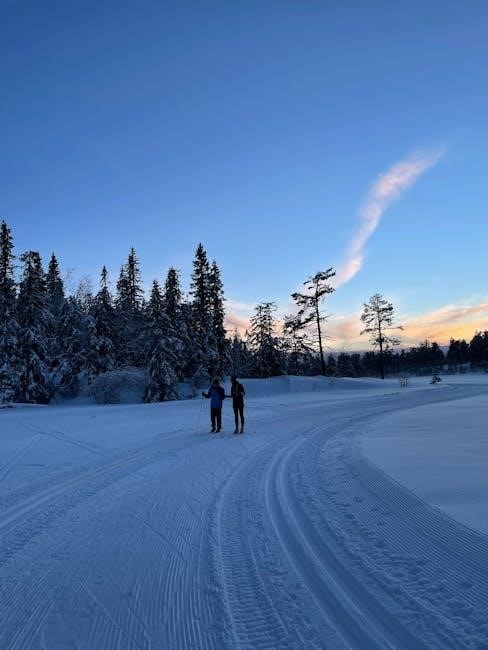
Proper ski pole length is as vital as ski length for efficient and comfortable cross-country skiing. Generally, pole length is determined by inverting your hand near your side, with a slight bend in your elbow. A good starting point is to multiply your height in centimeters by 0.7. However, style significantly impacts this.
Classic skiers often prefer poles that reach their chin or slightly higher, providing a rhythmic push. Skate skiers typically use poles that reach their nose or forehead for a more powerful drive. Backcountry skiers may opt for adjustable poles to adapt to varying terrain. Always prioritize comfort and a natural arm swing when selecting your pole length.
Beyond Length: Other Important Ski Features
While length is paramount, several other ski features dramatically influence performance. Ski width impacts floatation and maneuverability; wider skis excel in softer snow, while narrower skis are faster on groomed trails. Camber, the slight upward curve underfoot, provides grip and responsiveness. A more pronounced camber offers better kick wax acceptance for classic skiing.
Ski flex, or stiffness, also plays a crucial role. Softer flex skis are more forgiving and easier to control, ideal for beginners. Stiffer flex skis provide greater power transfer and stability for experienced skiers. Consider these factors alongside length to find skis perfectly suited to your technique and terrain preferences.
Ski Width and its Impact
Ski width significantly affects performance characteristics, influencing both floatation and maneuverability. Narrower skis, typically between 40-50mm, are designed for groomed trails and prioritize speed, making them ideal for classic and skate skiing techniques. Wider skis, ranging from 50mm to 80mm or more, provide increased surface area, enhancing floatation in softer, ungroomed snow conditions.
This makes wider skis preferable for backcountry touring and off-trail adventures. The wider platform also offers greater stability and control when navigating varied terrain. Choosing the appropriate width depends on your primary skiing environment and style; consider where and how you’ll be spending most of your time on the snow.
Ski Camber and Flex
Ski camber, the slight upward curve when unweighted, is vital for grip and control. Traditional camber distributes weight evenly, providing reliable kick wax contact in classic skiing. Skate skis often feature minimal or no camber, optimizing glide efficiency. Flex, or the ski’s stiffness, impacts energy transfer and stability.
Softer flex skis are more forgiving and easier to control, suitable for beginners or lighter skiers. Stiffer flex skis offer greater power transmission and responsiveness, benefiting experienced skiers and those tackling challenging terrain. The ideal camber and flex depend on your weight, skiing style, and skill level; a proper match enhances performance and comfort on the snow.
Troubleshooting Common Ski Sizing Issues
Incorrect ski sizing can lead to frustrating experiences. If skis feel unstable or difficult to control, length may be the issue. Too-long skis can be cumbersome, while too-short skis lack stability at speed. Weight distribution also plays a role; heavier skiers may need longer skis for adequate support and glide.
If you’re between sizes, consider your skiing style. Classic skiers might prefer slightly shorter skis for better kick, while skate skiers often benefit from longer lengths for increased glide. Don’t hesitate to consult with a ski shop professional for personalized advice and adjustments. A proper fit dramatically improves performance and enjoyment on the trails.
Where to Buy Cross Country Skis and Get Fitted
Finding a reputable retailer is key to acquiring properly fitted cross-country skis. Local ski shops offer expert advice and personalized fitting services, ensuring optimal ski length based on your individual needs. Many shops utilize sizing tools and consider your weight, height, and skiing style.
Online retailers provide convenience, but lack the benefit of in-person fitting. If purchasing online, carefully review size charts and consider utilizing a cross-country ski size calculator as a starting point. Remember, a professional fitting is invaluable, especially for beginners, to guarantee a comfortable and efficient skiing experience.