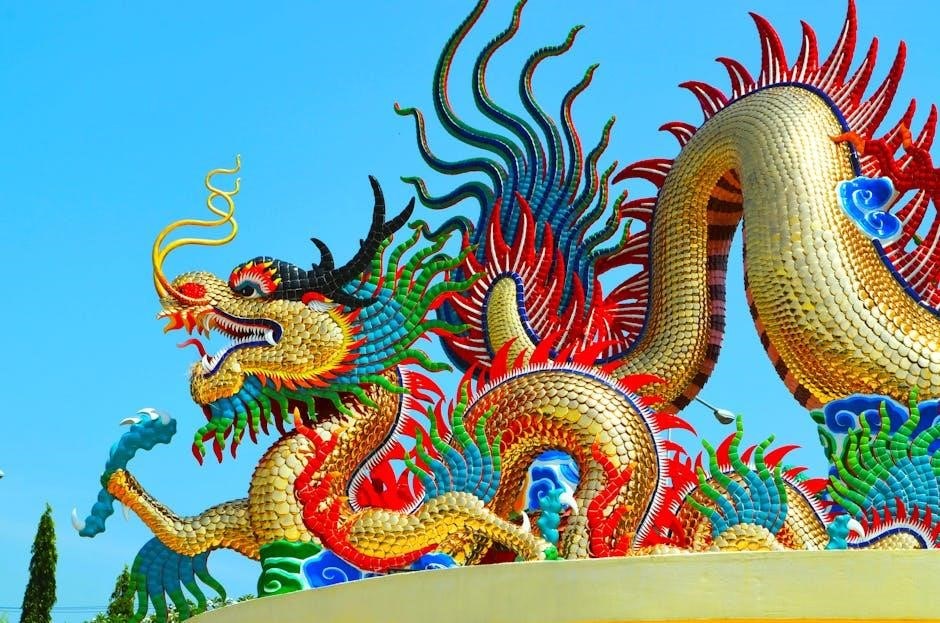
Delve into the captivating world of dragons! This guide explores their global myths, origins, anatomy, behaviors, and cultural significance, offering a practically complete overview.
What Defines a Dragon?
Defining a dragon proves surprisingly complex. Are they winged, fire-breathing beasts, or benevolent water deities promising fortune? Globally, the concept varies dramatically. Generally, dragons are depicted as large, powerful, reptilian creatures possessing magical or supernatural abilities.
Common traits include scales, claws, and often, wings – though not always. The ability to breathe fire is a frequently associated characteristic in Western lore. However, Eastern dragons often control water and weather.
Ultimately, a dragon’s essence lies in its symbolic weight: power, chaos, wisdom, and transformation. They embody both terrifying destruction and profound, ancient knowledge.
The Global Prevalence of Dragon Myths
Dragon myths aren’t confined to a single culture; they’re remarkably widespread. Once dominant across Asia and Europe, dragon lore now thrives particularly in China, but echoes remain globally. From the ancient Near East, where dragons guarded sacred sites, to Greco-Roman tales of serpentine monsters, their presence is undeniable.
Norse mythology features Fafnir, a dwarf transformed into a dragon, while Asian cultures revere dragons as symbols of power and prosperity. This pervasive presence suggests a deep-seated, archetypal resonance within the human psyche, reflecting fundamental fears and aspirations.
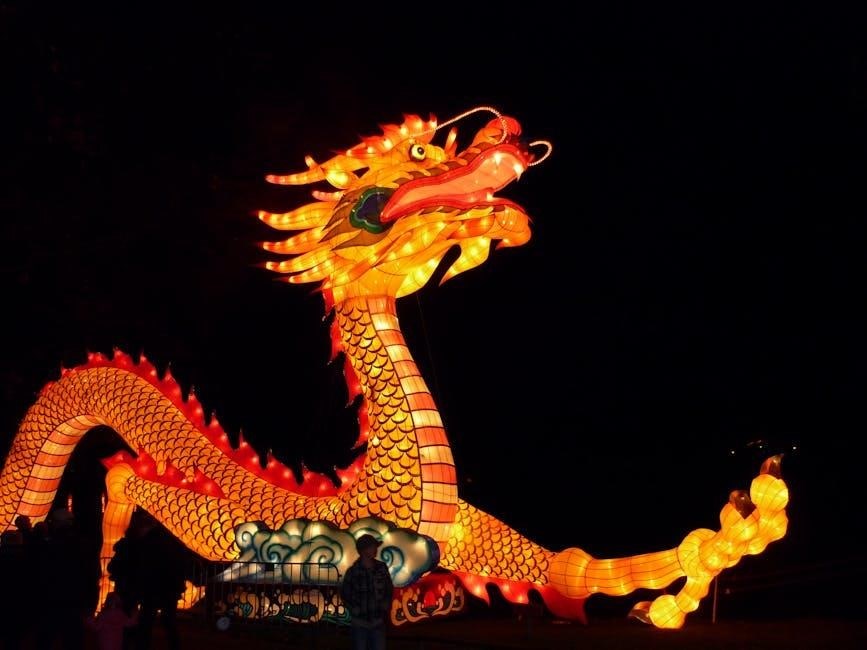
Dragon Origins and Historical Context
Tracing dragon origins reveals ancient roots! Myths evolved from early depictions of serpents and monsters, spreading across cultures and shaping diverse dragon traditions.
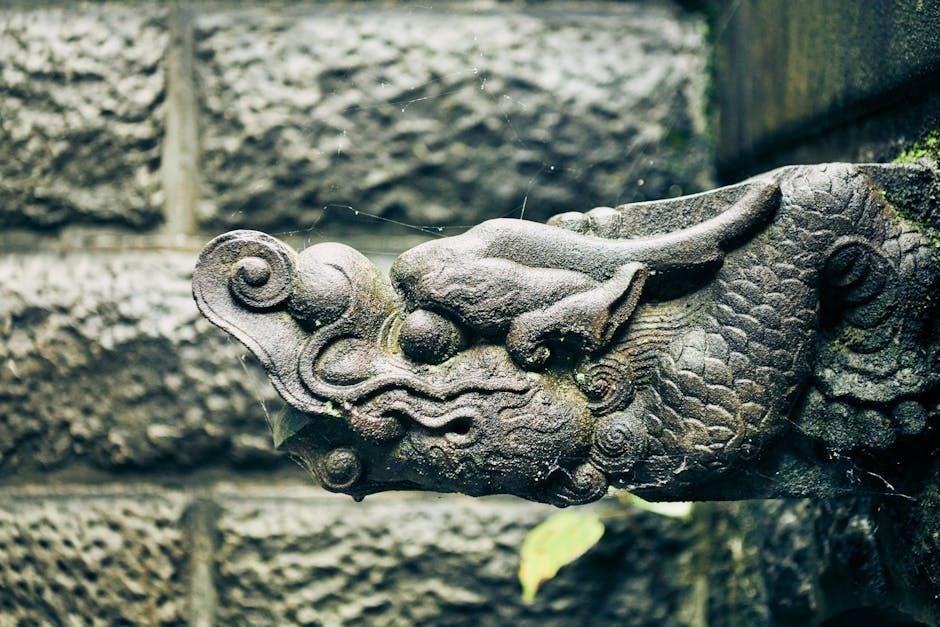
Ancient Near Eastern Dragons
Early dragon-like entities emerged in Mesopotamia and surrounding regions. These weren’t always winged beasts; often, they were depicted as serpentine creatures embodying chaos and primordial forces. The myth of Tiamat, a Babylonian goddess represented as a dragon, illustrates this vividly – she personified the saltwater ocean and was defeated by Marduk, establishing cosmic order.
Cadmus’s defeat of a dragon guarding a spring at Delphi, sowing its teeth to create warriors, demonstrates a similar motif. These ancient dragons weren’t benevolent symbols, but rather challenges to overcome, representing the untamed aspects of nature and the need for heroic intervention.
Greco-Roman Dragons: From Serpents to Monsters
Greek and Roman depictions of dragons evolved from simple serpentine forms to more monstrous representations. Initially, dragons, like Python, guarded sacred sites – Cadmus’s victory over the Delphi dragon exemplifies this role. However, they increasingly became symbols of chaos and were often slain by heroes.
Roman interpretations frequently borrowed from Greek mythology, incorporating dragons into narratives of conquest and danger. These creatures weren’t always fire-breathing; their power lay in their immense size, venom, and association with untamed wilderness. They represented obstacles to be overcome, solidifying the dragon-slayer archetype.
Dragons in Norse Mythology: Fafnir and Beyond
Norse mythology features dragons as powerful, often malevolent beings, most famously embodied by Fafnir. Originally a dwarf, Fafnir transformed into a dragon after murdering his father for cursed gold, becoming a formidable guardian of treasure. Sigurd’s slaying of Fafnir is a central epic tale, showcasing the dragon-slayer motif.
Beyond Fafnir, dragons like Níðhöggr gnawed at the roots of Yggdrasil, the world tree, representing cosmic destruction. These dragons weren’t simply beasts; they were integral to the Norse worldview, symbolizing greed, chaos, and the cyclical nature of existence.
The Dragon in Asian Cultures: A Deep Dive
Across Asia, dragons hold profoundly different, often benevolent, roles compared to Western depictions. In China, dragons symbolize power, prosperity, and good fortune, intrinsically linked to emperors and natural forces like rain and rivers. Japanese dragons, similarly, are guardians of water and weather, revered deities rather than monstrous threats.
Korean dragons are considered divine and benevolent, often associated with agriculture and water management. These Asian dragons are typically serpentine, lacking wings, and embodying wisdom and control – a stark contrast to their fiery Western counterparts.
Chinese Dragons: Symbols of Power and Prosperity
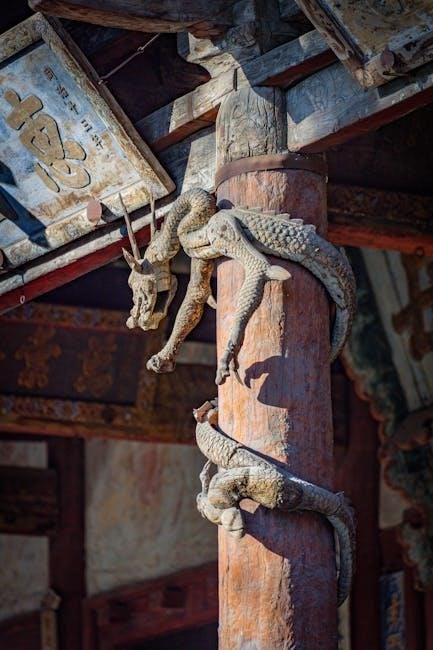
Chinese dragons, or long, are central to the nation’s mythology and culture, embodying imperial authority and cosmic energy. Unlike Western dragons, they are largely benevolent, representing good luck, strength, and the power to control water – vital for agriculture. Historically, the emperor was directly linked to the dragon, symbolizing divine right.
These majestic creatures appear in art, literature, and festivals, often depicted with long, serpentine bodies, four legs, and intricate scales. They aren’t inherently fire-breathing, but command the elements, bringing rainfall and ensuring bountiful harvests.
Japanese Dragons: Guardians of Water and Weather
Japanese dragons, known as ryū or tatsu, share origins with Chinese dragons, deeply intertwined with Shinto and Buddhist beliefs. They are primarily water deities, controlling rainfall, rivers, and seas, crucial for Japan’s agricultural prosperity. Often depicted as serpentine with three claws (distinguishing them from the four-clawed Chinese dragons), they are guardians of temples and sacred sites.
Unlike their Western counterparts, Japanese dragons aren’t typically portrayed as destructive forces; Legends tell of their wisdom and benevolent nature, often assisting humans. They are integral to festivals and art, symbolizing power and protection.
Korean Dragons: Benevolent and Divine
Korean dragons, or yong, are deeply revered as benevolent, divine creatures associated with water and agriculture, mirroring influences from Chinese dragon lore. Unlike Western dragons, they are almost exclusively seen as symbols of good fortune and prosperity, rarely depicted as malevolent beings. They possess a long, serpentine body, often with a beard and a pearl representing wisdom.
Korean dragons were believed to control rainfall, clouds, and rivers, vital for successful harvests. They often ascended to become celestial beings, and stories depict them assisting worthy humans. Dragon kings ruled over the four seas, embodying power and protection.

Dragon Anatomy and Physiology (Mythological)
Explore the fantastical anatomy of dragons! From scales and wings to claws, and the mystery of fire breathing, we dissect their mythical physical traits and senses.
Scales, Wings, and Claws: Common Physical Traits
Dragons universally possess formidable scales, offering protection akin to natural armor, varying in color and hardness across cultures. Powerful wings, enabling flight, are a defining feature, though size and structure differ – from leathery membranes to feathered appendages.
Sharp claws are essential for gripping, hunting, and defense, often depicted as capable of tearing through stone and metal. These physical attributes symbolize strength and resilience. The presence of horns, spines, and varied tail structures further contribute to their imposing presence, reflecting regional mythologies and ecological adaptations.
Fire Breathing: Mechanisms and Variations
The iconic ability of fire breathing remains a central dragon trait, though its mechanism varies in lore. Some theories suggest a dual-chambered organ mixing flammable gases ignited by a spark, while others propose a specialized gland producing combustible liquids.
Variations extend beyond simple flames; dragons may exhale ice, poison, or even lightning. The color and intensity of the fire often reflect the dragon’s age, power, or elemental affinity. This ability symbolizes destructive power, but also purification and transformation, deeply rooted in cultural interpretations.
Dragon Senses and Intelligence
Dragons are often depicted as possessing extraordinary senses, far exceeding those of humans. Keen eyesight, capable of spotting minute details from vast distances, is common. Enhanced hearing allows detection of subtle sounds, and a heightened sense of smell can track prey or detect approaching danger.
Intelligence levels vary greatly in myth, ranging from cunning animalistic instincts to profound wisdom and strategic thinking. Some dragons exhibit complex problem-solving skills, magical aptitude, and even the capacity for speech and deception, making them formidable opponents or valuable allies.

Dragon Behavior and Ecology
Dragons exhibit fascinating behaviors! From treasure hoarding and lair selection to complex interactions with humans, their ecological roles are deeply ingrained in lore.
Hoarding Treasure: Why Dragons Collect Gold
The dragon’s obsession with treasure, particularly gold, is a cornerstone of their mythology. This isn’t mere greed, but a complex behavior rooted in several interpretations. Some believe gold possesses magical properties, amplifying a dragon’s power or extending its lifespan. Others suggest it’s a display of dominance, a tangible representation of accumulated strength and wisdom.
The tale of Fafnir illustrates this, his transformation fueled by a cursed hoard. Hoarding also serves a practical purpose – a dragon’s scales are often depicted as attracting and absorbing wealth. Ultimately, the treasure isn’t the goal, but a consequence of the dragon’s inherent nature and power.
Dragon Lairs and Habitats
Dragon lairs are as varied as the dragons themselves, reflecting their power and personality. Commonly found in remote, inaccessible locations – mountains, caves, volcanic regions – these habitats offer both security and a strategic vantage point. The lair isn’t simply a dwelling; it’s an extension of the dragon, often imbued with magical defenses and traps.
Some dragons favor underwater caverns, guarding ancient secrets or controlling vital waterways. Others build fortresses within mountains, accumulating treasure over centuries. The environment often influences the dragon’s abilities, with volcanic lairs enhancing fire breath, for example.
Dragon Interactions with Humans
Historically, human-dragon interactions range from fearful conflict to respectful alliance. Often depicted as monstrous threats, dragons frequently demand tribute or terrorize villages, prompting heroic dragon slayers to emerge. However, myths also reveal instances of cooperation, where dragons offer wisdom, protection, or aid to worthy individuals;
These relationships are rarely simple, often involving tests of character or dangerous bargains. Some cultures view dragons as divine beings, deserving of worship, while others see them as chaotic forces to be controlled. The nature of the interaction frequently depends on the dragon’s alignment and the human’s intentions.

Types and Classifications of Dragons
Dragons exhibit diverse forms! Western dragons are classic fire-breathers, while Eastern dragons are serpentine and benevolent. Wyverns, drakes, and other variants further diversify dragonkind.
Western Dragons: The Classic Fire-Breathers
Western dragons, deeply rooted in European folklore, are often depicted as colossal, winged reptiles covered in scales. These magnificent beasts are renowned for their fiery breath, a potent weapon used for defense and destruction. They typically inhabit caves or mountainous regions, guarding vast hoards of treasure accumulated over centuries.
Stories frequently portray them as formidable adversaries, challenging brave knights and heroes in epic battles. Their association with chaos and greed is prevalent, yet some tales also showcase their intelligence and cunning. From the dragon slain by Saint George to Smaug in The Hobbit, Western dragons remain iconic figures in literature and imagination, embodying both terror and awe.
Eastern Dragons: Serpentine and Benevolent
Unlike their Western counterparts, Eastern dragons – particularly those from Chinese, Japanese, and Korean traditions – are generally seen as benevolent and divine creatures. Often depicted as serpentine, long, and wingless, they symbolize power, wisdom, and good fortune. They are strongly associated with water, controlling rainfall, rivers, and seas, ensuring agricultural prosperity.
These dragons aren’t hoarders of gold, but rather guardians of sacred places and bringers of luck. Their appearance in art and mythology signifies imperial authority and positive energy. Representations vary across cultures, but the core concept of a wise, powerful, and helpful dragon prevails, contrasting sharply with the often-destructive Western archetype.
Wyverns, Drakes, and Other Dragon Variants
Beyond the classic four-legged, winged dragon, a fascinating array of related creatures populate mythology. Wyverns, often depicted with only two legs and winged arms, are common in heraldry and folklore, frequently symbolizing pestilence. Drakes are generally smaller, less powerful dragons, sometimes lacking the ability to breathe fire.
Other variants include the Amphiptere (wingless, serpentine dragon) and the Lindworm (a large, wingless serpent). These distinctions aren’t always rigid, and regional variations abound. Understanding these subtypes reveals the diverse interpretations of draconic forms across cultures, showcasing the adaptability of the dragon archetype itself.
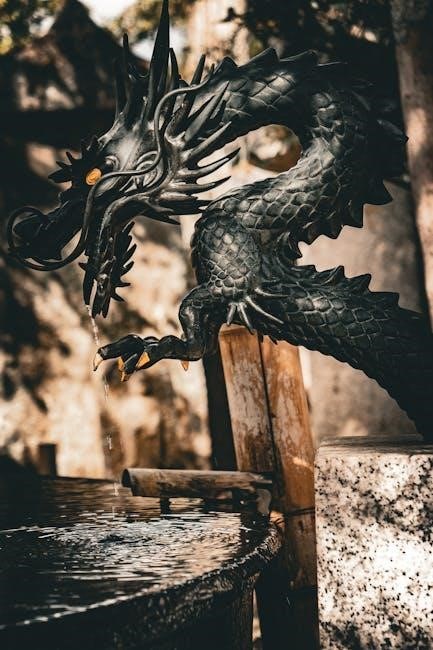
Dragons in Modern Culture
Dragons thrive in contemporary media! From literature and film to gaming, these mythical beasts continue to inspire and captivate audiences worldwide, evolving endlessly.
Dragons in Literature and Fantasy
Dragons have long been staples of literature, evolving from monstrous adversaries to complex, even sympathetic characters. Early appearances showcase dragons as symbols of chaos, like in Beowulf, demanding heroic confrontation.
However, modern fantasy, influenced by authors like J.R.R. Tolkien (Smaug) and Ursula K. Le Guin, presents nuanced portrayals. Dragons gain intelligence, personality, and sometimes, even ally with humans. Anne McCaffrey’s Dragonriders of Pern series revolutionized the genre, establishing a deep bond between riders and dragons.
Contemporary fantasy continues to explore these themes, offering diverse dragon interpretations – benevolent guardians, ancient beings, or creatures grappling with morality.
Dragons in Film and Television
Dragons’ cinematic presence has dramatically evolved, from the menacing creature in early adaptations to visually stunning, emotionally resonant beings. Films like “Dragonslayer” (1981) showcased impressive practical effects, while “Dragonheart” (1996) explored a unique dragon-human partnership.
The “How to Train Your Dragon” franchise revolutionized dragon depiction, emphasizing empathy and companionship. “Game of Thrones” reintroduced dragons as powerful, fearsome forces, influencing modern fantasy visuals. Television series, like “House of the Dragon”, further expand upon complex dragon lore.
These portrayals demonstrate a growing appreciation for dragons’ multifaceted nature, captivating audiences worldwide.
Dragons in Gaming: From RPGs to Video Games
Dragons have long been central to gaming experiences, appearing as formidable foes and powerful allies. Early role-playing games (RPGs) like “Dungeons & Dragons” established dragons as iconic monsters, defining their stats and abilities. Games like “The Elder Scrolls V: Skyrim” feature complex dragon encounters and lore.
Video games, such as the “Dark Souls” series, present dragons as challenging boss battles demanding strategic combat. “Monster Hunter” focuses on hunting and crafting from dragon parts. More recently, games like “Spyro the Dragon” offer a lighter, more accessible dragon experience.
These games showcase dragons’ versatility within interactive entertainment.

Dragon Symbolism and Meaning
Dragons embody diverse meanings: power, chaos, wisdom, and transformation. They represent authority, destruction, or benevolent guardianship, reflecting cultural interpretations across the globe.
Dragons as Symbols of Power and Authority
Throughout history, dragons have consistently represented immense power and unquestionable authority. In many Asian cultures, particularly China, dragons were intrinsically linked to emperors, symbolizing their divine right to rule and their control over natural forces like weather and water.
This association extended to their physical depiction – ornate, majestic, and commanding respect. Western traditions, while often portraying dragons as adversaries, still acknowledged their formidable strength and dominance. The very act of slaying a dragon became a demonstration of a hero’s power and courage, further cementing the dragon’s status as a symbol of ultimate authority. Their hoard of treasure also signifies control and dominion over wealth and resources.
Dragons as Symbols of Chaos and Destruction
Conversely, dragons frequently embody chaos, devastation, and untamed natural forces. In numerous Western narratives, dragons are portrayed as monstrous beings wreaking havoc upon kingdoms and terrorizing populations. Their fiery breath symbolizes destructive power, capable of razing settlements and scorching landscapes.
This destructive aspect isn’t merely physical; dragons often represent primal, uncontrollable urges and the disruption of established order. The tales of dragon slayers often center on restoring balance by vanquishing these chaotic entities. Even in cultures where dragons are revered, a degree of respect for their potential for destruction remains, acknowledging their untamed nature and immense power.
Dragons as Symbols of Wisdom and Transformation
Beyond power and destruction, dragons often represent profound wisdom, longevity, and transformative power. Particularly in Eastern cultures, dragons are seen as benevolent creatures possessing ancient knowledge and insight. They are associated with spiritual enlightenment and the ability to transcend earthly limitations.
The shedding of scales can symbolize renewal and rebirth, while their connection to water – a life-giving force – reinforces their role in fostering growth and change. Dragons aren’t simply powerful beings; they are guardians of hidden truths and catalysts for personal and societal evolution, embodying the potential for positive transformation;
Dragon Lore and Legends
Explore timeless tales! From heroic dragon slayers to surprising alliances, and even creation myths featuring dragons, discover the enduring narratives shaping our fascination.
The Dragon Slayer Archetype
The dragon slayer embodies courage and triumph over chaos. This archetype, prevalent across cultures, represents humanity’s struggle against primal forces and overwhelming power. From Cadmus defeating the Delphi dragon to Siegfried’s legendary battle with Fafnir, these heroes often possess exceptional skill or divine aid.
Their quests frequently symbolize moral purification and the restoration of order. Slaying a dragon isn’t merely a physical feat; it’s a symbolic victory over greed, destruction, and the unknown. The archetype continues to resonate in modern fantasy, representing the ultimate test of a hero’s strength and resolve, echoing ancient legends.
Stories of Dragon-Human Alliances
While often depicted as adversaries, dragons and humans sometimes forge remarkable alliances. These narratives challenge the typical “slayer” trope, showcasing mutual respect and shared goals. Though less common in Western lore, instances exist where humans gain a dragon’s aid through wisdom, bravery, or a pact.
Eastern traditions, particularly in Asian cultures, frequently feature benevolent dragons assisting humanity. These alliances often involve dragons offering protection, guidance, or bestowing blessings. Such stories highlight the potential for harmony between different species, demonstrating that not all dragons crave conflict or hoard treasure.
The Role of Dragons in Creation Myths
Dragons frequently appear as pivotal figures in creation myths across diverse cultures. Often embodying primordial forces, they represent the chaotic energy from which the world emerges. In some narratives, a cosmic dragon is slain, its body forming the landscape – mountains from its bones, rivers from its blood.
Asian cosmologies often depict dragons as benevolent creators, shaping rivers, controlling weather, and bringing rainfall essential for life. These dragons aren’t vanquished but actively participate in the ongoing creation and maintenance of the world, symbolizing power and the cyclical nature of existence.

The Future of Dragon Lore
Dragon myths will continue evolving through emerging media, preserving traditions while inspiring new interpretations in literature, gaming, and film for generations to come.
Continued Evolution of Dragon Myths
The enduring appeal of dragons ensures their myths won’t remain static. Contemporary fantasy literature consistently reimagines these creatures, often subverting traditional tropes. Modern interpretations explore nuanced dragon personalities, challenging the simplistic “monster” archetype.
Digital art and online communities foster collaborative world-building, generating fresh dragon lore. Furthermore, the increasing accessibility of storytelling platforms empowers diverse voices to contribute to the ongoing narrative. This dynamic process guarantees dragons will continue to adapt and resonate with audiences, reflecting evolving cultural values and anxieties, ensuring their legendary status endures.
Dragons in Emerging Media
Virtual Reality (VR) and Augmented Reality (AR) offer immersive dragon encounters. Imagine soaring on a dragon’s back through fantastical landscapes or battling one in your living room! These technologies promise unprecedented levels of interaction and realism.
Interactive fiction and branching narrative games allow players to shape dragon-related storylines, fostering a sense of agency. Moreover, the metaverse presents opportunities for communal dragon lore creation and shared experiences. These platforms are poised to revolutionize how we engage with dragon mythology, moving beyond passive consumption to active participation and collaborative storytelling.
Preserving and Celebrating Dragon Traditions
Maintaining dragon lore requires active documentation and storytelling. Supporting cultural festivals, artistic representations, and academic research ensures these myths endure for future generations. Community-led initiatives, like dragon-themed workshops and performances, foster engagement.
Digital archives and online platforms can democratize access to dragon legends, making them available globally. Encouraging intergenerational transmission of stories—from elders to youth—is crucial. By celebrating the diverse interpretations of dragons across cultures, we honor their enduring power and ensure their continued relevance in a changing world.